
— Email Marketing
Email should be 30% of your revenue.
We build email programs that drive up your revenue without torching your sender reputation or burning out your list.
Get Your Free Email Marketing Audit.
Why Most Emails Underperform
Email still delivers the highest ROI of any digital channel. For a well-run ecommerce brand, it accounts for 30% or more of total revenue. For most businesses we audit, it’s closer to 10%.
The gap isn’t the channel. It’s the execution.
Generic blasts, half-built flows, no segmentation, and lists full of dead weight that quietly drags deliverability down across every send. The channel works. Most programs don’t.
How We Can Help
We plan it, build it, and improve it week after week. Here’s what that looks like in practice.
Email Funnel Strategy
We map the full subscriber journey from first opt-in to repeat purchase. Every flow has a job. Every campaign has a reason to exist. Every segment has a plan.
We don’t send for the sake of sending.
Copywriting & Design
We’ve tested thousands of subject lines and email layouts across hundreds of accounts. We know what drives opens, what drives clicks, and what drives unsubscribes.
We write and design with that data behind every decision.
Automation Setup
Welcome flows, abandoned cart, post-purchase, win-back, browse abandonment, replenishment. We build the automations that should be running in the background of every account, and we build them to match how your buyers actually decide.
ESP Guidance
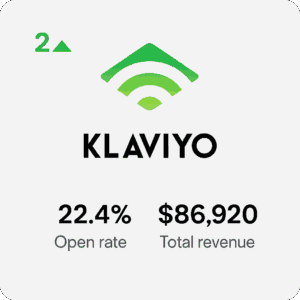
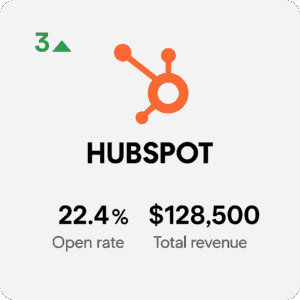
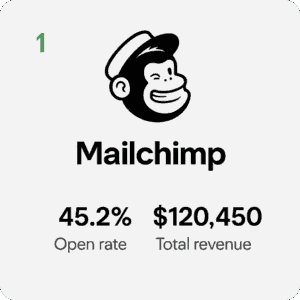
Klaviyo, Mailchimp, ActiveCampaign, HubSpot, Customer.io. We’ve built programs on all of them.
If you’re on the wrong platform for your business, we’ll tell you. If you’re on the right one but using 20% of it, we’ll fix that too.
List Health & Segmentation
Clean lists deliver. Dirty lists end up in spam. We prune inactive subscribers, segment by behavior and lifecycle stage, and make sure every send lands in the primary inbox.
Insights & Reporting
We tell you what’s producing revenue, what’s dragging performance, and where we’re pushing next. Plain language.
No open-rate victory laps on emails that didn’t drive a single purchase.
We don’t send emails.
We build an owned revenue channel.
Most email agencies send campaigns. That’s it. They queue up weekly blasts, hit send, and show you open rates at the end of the month.
We treat email as the highest-margin channel in your business, because that’s what it is. Every subscriber is an asset you already paid to acquire. Every send is a chance to drive margin without paying a platform for the privilege. Every flow is a compounding system that keeps producing long after it’s built.
That means we care about deliverability before open rates, revenue per subscriber before list size, and the lifetime value of a segment before the click rate on a single campaign.
Real Clients,
Real Results.
What happened. Why it worked.




pp
gp

mb

sc

ic

hbh

BHHSNW

BPF

PHX

hc

tf

ms
Their Words,
Not Ours
Here’s what our clients have said about working with us.

“Nick has been an awesome partner to work with. He’s communicative and thorough in his process and execution. He helped us organize our email lists and implement drip campaigns. 10/10 would recommend (already did!) and hire again for future email needs. Thanks, Nick!”


“The automations and systems Nick set up for my business have been a total game-changer. My customer acquisition and retention have grown like crazy since I started working with him and his team. It’s saved me so much time, and the headache of trying to do everything manually. Now I get to stay focused on what I’m good at, and Tailored Edge keeps everything running smooth behind the scenes.”


“I can’t imagine my business without Tailored Edge Marketing, and I still wonder what I was doing all those years before they became part of my team! They took us to the next level after being stuck at a standstill for several years. With all their hard work, input, and feedback, I finally feel like my business is reliable and stable again. We now have targeted leads coming into our business every day, getting to know what we offer, and converting into paying clients. Thank you, Nick!”


“Nick and Tailored Edge did a great job helping us launch our new bike lines. They didn’t just bring us traffic — they helped us actually sell bikes, and not cheap ones either. Nick understood what we needed, made smart tweaks along the way, and got us real results.”


“If you’re looking to grow your business, hiring Tailored Edge is the smartest move you can make. Nick and his team know the Facebook ad platform inside and out and build ads that keep targeted traffic moving through the funnel all the way to conversion. The results have far exceeded our expectations.”


“Nick came in and got right to it. He cleaned up our Facebook ads, gave us reporting that actually made sense. He really helped us figure out what was working and what was wasting our money. Before Nick, we were basically flying blind. He turned the lights on and got us moving fast in the right direction. Couldn’t recommend him more. Nick is a true professional and a stand-up gentleman. Knows his stuff, stays on point, and gets it done.”
Featured on Shark Tank
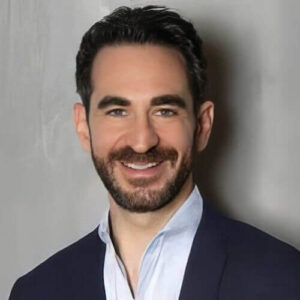

“When we brought Nick into our enterprise account, we were facing major challenges. Facebook’s platform changes had thrown everything off, and we needed someone who could step in fast, bring structure, and get us back on track. Nick brought a calm, steady hand and a smart strategy when we needed it most. He helped stabilize our campaigns, adapt to the changes, and keep performance strong when a lot could have gone wrong. His ability to cut through the chaos made a real difference for us.”


“Hiring Nick and Tailored Edge to help us with our Facebook ads has been amazing! Not only have they saved us a lot of time and helped us grow our company, but they are also easy to work with, timely, proactive, and proficient in what they do. We can’t give them a higher recommendation.”


“Tailored Edge helped our startup build real momentum through growth hacking and Facebook ads. Nick and his team were proactive, strategic, and made a big impact when we needed it most.”


“Nick made a huge difference for our Facebook Ads — we saw real results fast after he stepped in. Easy to work with, highly effective, and truly knows how to drive success. Highly recommended!”


“It’s so hard to find a good digital ads guru. Everyone says they’re great at it, and very few that I’ve hired end up doing much. Nick is different. From day one, he took charge, optimized what we were doing, and sales started coming in. He also provided valuable feedback on changes we should make to our creatives for better conversion.”


“Nick and the team at Tailored Edge helped us with everything — redesigning our website, getting our Facebook and LinkedIn ads up and running, managing all the content, keeping the promotions moving. I really appreciated how hard they worked and how easy they made it for us to understand what needed to happen. We got where we needed to go because of their help.”


“Nick has been awesome to work with! He made it so much easier to keep my email marketing on point. He’s helped me dial in my Facebook and TikTok ads, my lead forms, and even my landing pages. As an entrepreneur, there’s always a million things to juggle, so having Nick and Tailored Edge in my corner has been a huge relief. I know my marketing looks beautiful, stays consistent, and actually brings in sales.”

Heard This One Before?
We’ve all heard the lines. That’s why we cut the fluff, show you the numbers that matter, and make email work the way it should.
"More emails = more money. If you're not blasting daily, you're leaving sales on the table."
—
"Open rates don't matter as long as lots of people see your emails."
—
"Hide the unsubscribe link so your list looks bigger."
Our Process
Strategy Call
We start with a focused conversation about your goals, your audience, your current program, and where email should fit in your revenue mix. No pitches. Just a real discussion about what's working, what's not, and what it would take to fix.
Audit & Plan
We review your existing program: campaigns, automations, segments, deliverability, list health, and results. We map what's pulling its weight and what's just taking up inbox space, then build a plan sized to your business.
Build & Setup
We write the emails, design the templates, build the flows, set up the segments, clean the list, and configure the tracking. We handle the technical setup so nothing slips through the cracks between plan and launch.
Launch & Test
Campaigns and flows go live. We watch performance in real time: opens, clicks, revenue, unsubscribes, deliverability. What works stays. What doesn't gets cut or rebuilt.
Optimize & Expand
The engine's running. Now we fine-tune for growth. New segments, new flows, new angles, new tests. Your revenue per subscriber should compound over time. If it isn't, we'll tell you before you ask.
Ask These Questions
—No Matter Who You Hire
These are the questions we’d ask if we were in your shoes—because a strong email strategy starts with the right conversations.
Can email still work if my list is tiny?
Yes. Smaller, engaged lists almost always outperform larger, unsegmented ones. What matters is how you communicate and how effectively you move subscribers toward action. A list of 2,000 engaged buyers can out-earn a list of 50,000 dead names. We’d rather build you the first one than help you send to the second.
Will this work for my business, or is it too niche?
Email works for almost every business that has customers. B2B, DTC, SaaS, service, retail, ecommerce. The playbook changes by industry, but the underlying principle (own your audience, communicate well, drive margin) is universal. If email genuinely isn’t the right channel for your business, we’ll tell you on the strategy call and save you the retainer.
Can you work with our current ESP, or help us move to something better?
Both. We’ve built programs on Klaviyo, Mailchimp, ActiveCampaign, HubSpot, Customer.io, and more. If your current platform fits your business, we’ll work with it. If it’s actively holding you back, we’ll show you the math on switching and handle the migration if you decide to move.
I’ve already built automations Can you make them actually perform?
Usually. Most automations we inherit are built correctly at the technical level but structured poorly at the strategy level. Wrong triggers, wrong segments, wrong messaging for the buyer’s stage. We rebuild around how your customers actually decide, and performance usually improves within the first month.
Do you write the emails too, or just tweak what we send?
We write, design, and build. Most of our engagements are end to end: we own the strategy, the copy, the design, the build, and the optimization. If you have in-house resources and want us in a more advisory role, we can structure it that way. Either works, as long as someone is actually doing the work well.
Can you fix our list, or is it beyond saving?
Almost always fixable. We prune inactive subscribers, re-engage dormant ones, and rebuild segmentation so you’re sending the right message to the right people. A “dead” list is usually just a mis-segmented list. That said, if we look at your data and think the best move is a clean restart, we’ll tell you.
Do you stick around, or disappear like every freelancer we’ve regretted hiring?
Our average engagement is 14+ months. We’re not a fire-and-forget setup team. Email compounds over time, and the real gains (better segmentation, smarter automations, higher revenue per subscriber) happen in months three through twelve. We’re built for the long arc, not the launch photo.
How often are we emailing, and what’s too much?
Depends on your business, your offer, and your audience. DTC brands often send 3 to 5 campaigns per week on top of flows. B2B services might send 1 to 2 per month. The right answer isn’t a number, it’s whatever frequency drives revenue without burning your list. We test into it, watch the signals, and adjust.

We’re Not Here to Make You an Email Expert
We’re here so you don’t have to be one.


