
Est. reading time: 5 minutes
Delegation has a branding problem. We think it means handing tasks to people with less time and less context, then wondering why quality slips. The smart move is different: delegate work to software, not people. Codify the grind, elevate the judgment, and let teams focus on problems only humans can solve. This isn’t a futuristic dream—it’s a disciplined operating system you can adopt today.
Stop Overloading Teams—Automate the Grind Today
If a task is repetitive, time-sensitive, and rules-driven, it doesn’t belong on a human calendar. It belongs in code. Overloaded teams are a symptom of an infrastructure failure: you’re renting human attention to do what software could do at scale, flawlessly, and without resentment. Draw a hard line—no more heroic “just this once” manual runs. If it happens twice, it must be automated.
Start by harvesting the top ten recurring tasks that create the most drag: report generation, data reformatting, approvals with clear criteria, environment provisioning, customer routing, compliance checks. Instrument the current pain: volume, time-to-complete, error rates. This baseline becomes your business case and your success scoreboard. Put every task into a central backlog with a ruthless SLA for automation.
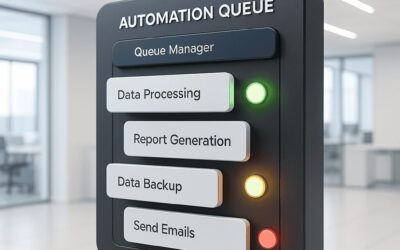
Ship automation as small, composable services, not sprawling RPA band-aids. Prefer native integration over screen scraping. Use triggers, queues, and idempotent workers. Give the team a visible “automation pipeline” where they can submit pain points, track progress, and retire manual steps. This is not a side project—it’s the backbone of how work flows.
Define Outcomes, Then Code the Process into Tools
Start with the outcome, not the tool. What should be true when the job is done? What inputs are allowed, what outputs are guaranteed, what errors can occur, and how do you recover? Treat each process as a product: write a one-page spec, define success metrics, and outline failure modes. If you can’t describe it clearly, you can’t automate it cleanly.
Translate that outcome into a deterministic flow. Extract the rules from tribal knowledge and meeting lore. Aim for idempotence, explicit state transitions, and testable contracts. Encode data validation, timeouts, retries with backoff, and dead-letter queues by default. The goal isn’t clever code; it’s resilient, comprehensible systems that survive real-world messiness.
Bake governance into the tool. Config belongs in version control, not someone’s head. Every change should be reviewable, testable, and revertible. Provide dry-run modes, synthetic data tests, and shadow deployments so you can compare automated outcomes to today’s manual baseline. Make the “button to run it” part of the product—CLI, scheduler, or UI—so nobody has to guess how it works.
Build a Clear API for Every Repeatable Decision
Decisions are workloads. If a decision happens often and can be expressed in rules or models, give it an API. Price this order? Approve this refund? Route this ticket? The inputs should be explicit, the output unambiguous, and the rationale logged. This converts gut-feel workflow into a dependable decision service that anyone can call.
Design the contract ruthlessly. Define required fields, permissible ranges, and versioned schemas. Include a decision reason, confidence score, and trace ID for every response. Use feature flags to roll out new logic and versioning to avoid breaking callers. If a decision can’t be automated fully, create a human-in-the-loop path only for exceptions with clear thresholds and SLAs.
Guardrails protect speed. Add policy enforcement, rate limits, auth scopes, and auditable logs. For ML-backed decisions, include drift detection, explainability summaries, and fallback rules. Build dashboards that reveal decision distributions, overrides, and edge cases—because every strange spike is a design brief for your next iteration.
Measure, Iterate, and Retire Manual Steps Fast
What you measure moves. Track lead time, success rate, rework, and cost per transaction before and after automation. Set service-level objectives for your automated flows just like you would for customer-facing features. Publish the scorecards so everyone sees that automation isn’t a pet project; it’s the new operating normal.
Iterate in tight loops. Shadow-run the automated path against live data, compare outcomes, and close gaps. Use canary rollouts and progressive exposure by segment or risk band. When parity is proven, flip the default to automated and keep the manual path as a temporary safety valve—then put a sunset date on it. Don’t let “temporary” ossify into policy.
Celebrate deletion. Removing a manual checklist, decommissioning a shared inbox, or closing a recurring ticket is the real victory lap. Document the new truth, update runbooks, train teams on the exception paths, and archive the old process. The goal is compounding leverage: every retired manual step frees attention to automate the next one.
Delegation to software isn’t about replacing people—it’s about refusing to waste them. Define outcomes, encode them as services, expose decisions via crisp APIs, and relentlessly measure your way to deletion of manual work. Build a company where the conveyor belt is code, and the humans are the designers, critics, and explorers. That’s the smart way to scale.