
Est. reading time: 5 minutes
You don’t need more hacks—you need one reliable rhythm. A simple, repeatable workflow can return 10+ hours to your week without working later, hustling harder, or adding another tool. This is the blueprint: define a single weekly arc, automate the repeats, guard deep work like treasure, and iterate the system every Friday so it gets sharper with age.
Cut the Chaos: Define One Clear Weekly Workflow
Start with one measurable outcome for the week. Not seven. One. Write it at the top of a living document called your Weekly Brief: the single deliverable that moves the needle most. Everything else lives beneath it as support tasks or gets parked for later. When the week doubts you, this brief answers back: here’s what we’re doing, and here’s why.
Give each day a job. Monday sets the plan and preps assets. Tuesday–Thursday execute the heavy lift. Friday closes loops and runs the review. This creates predictable momentum: you’re not asking “what now?” every morning—you’re running a proven arc. Meetings and messages collapse into their appropriate day, and your calendar becomes a map, not a minefield.
Centralize work into one board. One status language (Backlog → Ready → Doing → Done). One intake lane for requests. When everything shows up in one place, prioritization becomes arithmetic, not politics. You convert noise into a visible queue, sequence it against your Weekly Brief, and move cards rightward. The brain-saver isn’t motivational quotes—it’s fewer places to look.
Automate Repeats: Templates, Triggers, Zero Drag
Anything you did last week and will do again should exist as a template. Weekly Brief template. Meeting agenda template. Launch checklist template. Save the steps where you almost always trip—handoffs, approvals, links, owners. Templates eliminate the “how do we do this?” tax and let you spend energy on the work, not the wrapper.
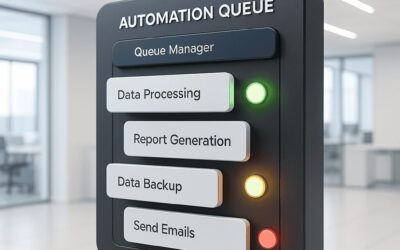
Create trigger-based automation for routine transitions. When a task moves to Ready, auto-assign the owner and due date. When a card hits Done, auto-notify stakeholders with a prewritten summary field. Use calendar rules: when a meeting is scheduled with “Client Review,” auto-attach the standard prep doc. Your system should quietly push work forward so you don’t have to.
Reduce micro-friction across all tools. Text expanders for common replies, canned email responses for status updates, saved filters that show only Today + Blockers, keyboard shortcuts posted on your monitor for a week until they’re automatic. The goal is zero drag: if it takes more than two clicks to find, send, or start, you’ve found a time leak to patch.
Batch Deep Work: Protect Time, Ship Faster Weekly
Guard two 90-minute deep work blocks per day, Tuesday–Thursday. Non-negotiable. These are headphones-on, notifications-off, door-closed sessions aimed at the Weekly Brief. Stack shallow tasks around them—never inside them. You’ll ship in chunks, not crumbs, and you’ll finish the week with a real result instead of a pile of half-drafts.
Cluster all meetings into tight windows. Put one “sync stack” late mornings and one “external window” mid-afternoons. Ban meetings from deep blocks. You’ll stop losing hours to context-switching and recapture the hidden recovery time that kills momentum. Remember: a 30-minute meeting placed badly can consume an entire hour of output.
Design your environment to signal focus. Preload the tab set you need for the day’s deep block; close everything else. Use a single playlist. Put your phone in another room. Keep a “parking lot” page open to dump stray thoughts so they don’t hijack you. When the block starts, you’re already moving. Friction is the enemy; glide is the strategy.
Review, Refine, Repeat: A System That Sticks
Close every Friday with a 30-minute review. Ask: What shipped? What slipped? What surprised me? Capture three facts and one fix. Facts keep you honest; fixes keep you improving. Update the Weekly Brief template with what you’ve learned so next Monday starts smarter than the last.
Measure cycle time and meeting load. Track how long it takes work to move from Ready to Done and how many hours you spend in meetings per week. If cycle time creeps up, tighten WIP limits or clarify task definitions. If meetings bloat, compress the stacks or replace them with async updates. Data turns vague frustration into precise adjustments.
Tune in small strokes. Rename a status for clarity. Merge two recurring touchpoints. Add one automation that eliminates a weekly nag. The system compounds when you improve the process, not just the output. You’re building a flywheel: define the week, automate the repeats, protect the blocks, learn on Fridays—then spin it faster.
Time freedom is not a myth; it’s a method. Commit to one weekly arc, automate like a designer, defend deep work like a fortress, and treat Friday as your upgrade station. Run this for three weeks and you won’t just save 10+ hours—you’ll feel the week tilt back under your control.