
Est. reading time: 4 minutes
Most businesses aren’t failing because Facebook doesn’t work. They’re failing because their Custom Audiences are a mess—stale data, sloppy segmentation, and zero protection against overlap. Fix that, and your media spend stops leaking and starts compounding.
Stop Wasting Spend: Fix Facebook Custom Audiences
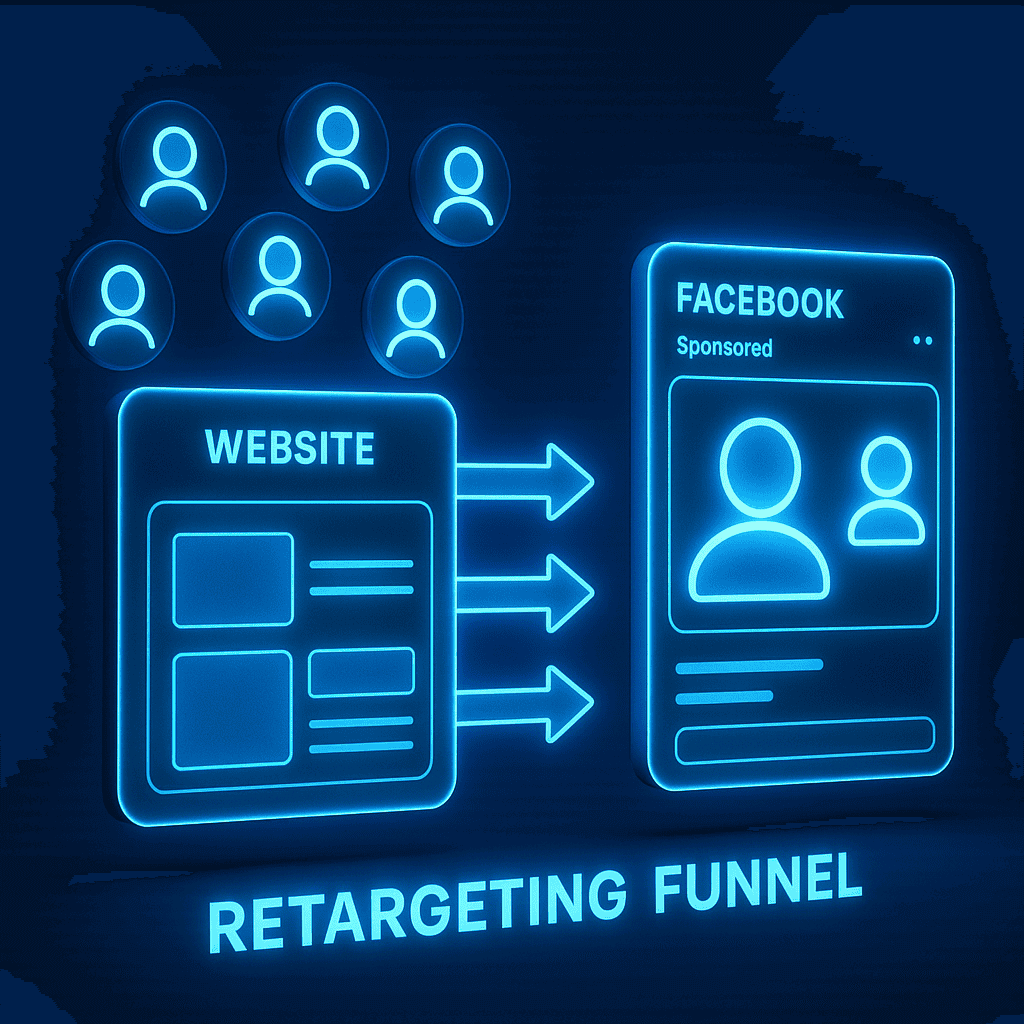
You don’t have a targeting problem; you have an audience hygiene problem. When you lump “all website visitors (180 days)” into one retargeting pool, you kneecap relevance and torch budget. Start with intent tiers: 0–7 day high-intent (cart/checkout), 8–30 day mid-intent (product views), and 31–90 day low-intent browsers. Each tier deserves different bids, creative, and frequency caps.
Exclusions are your cheapest optimization lever. Prospecting should exclude recent purchasers and high-intent visitors, and retargeting should exclude anyone who has already converted within an appropriate window. Create account-level “Global Exclude” lists (recent purchasers, refunders, unsubscribes, employees, competitors) and apply them religiously to prevent cannibalization and faux performance.
Audit overlap and scale intelligently. If two ad sets chase the same people, you bid against yourself and inflate CPMs. Use the audience overlap tool, collapse redundant ad sets, and keep retargeting pools large enough to exit learning. Then judge performance with incrementality in mind—use holdouts or geography splits to validate that your Custom Audiences are driving net-new outcomes, not just credit-stealing.
The Pixel Isn’t Enough: Segment Like a Pro
Relying on the pixel alone is dated and costly. Browser restrictions, ad blockers, and signal loss mean you’re missing events you can’t afford to miss. Implement Conversions API with deduplication (event_id) and pass complete parameters (value, currency, content_ids, content_type). Your event match quality should trend high, or your Custom Audiences will be thin, lagged, and expensive.
Segmentation is strategy, not busywork. Build audiences that mirror your funnel and product logic: viewed category X but not Y, added-to-cart for SKU family A but no purchase, repeat purchasers of B due for replenishment. Use recency windows that reflect buying cycles—7/14/30 for fast-moving goods; 14/30/90+ for high consideration. Dynamic Product Ads only shine when audiences and product sets map cleanly.
Go beyond web data. Sync CRM and offline events to capture phone orders, store purchases, and sales-assisted conversions. Create value-based audiences (top 10–20% LTV), churn-risk cohorts (no purchase in 120+ days), and high-frequency buyers. Custom Audiences become a competitive moat when they blend pixel + CAPI + CRM + catalog signals into precise, monetizable segments.
Consent, Freshness, and Match Rate: Non-negotiable
If consent is fuzzy, your performance will be too. Collect explicit permission for ads personalization, respect regional requirements, and honor opt-outs across all data sources. Only enable advanced matching when you have consent, and keep your privacy policy brutally clear about advertising use-cases. Non-compliant data isn’t just risky—it degrades delivery and throttles scale.
Freshness is the oxygen of Custom Audiences. Uploads from last quarter are dead weight: recency drives intent, and intent decays fast. Automate daily or weekly syncs from your CRM, set rolling windows that match purchase cadence, and prune anyone who no longer qualifies. Stale audiences inflate frequency and crater ROAS.
Match rate is a math problem you can solve. Feed multiple identifiers—email, phone with country code, first/last name, city/state/ZIP, and country—to improve match. Standardize formatting (lowercase emails, E.164 phone), remove junk contacts (role accounts, bounces), and aim for high event match quality in Events Manager. Better match rate equals bigger, cheaper, more accurate Custom Audiences.
Exclude, Sequence, Lookalikes: Protect Your ROAS
Exclusions protect margin. Remove recent purchasers from prospecting for at least one purchase cycle, exclude SKU purchasers from seeing the same SKU again (unless it’s a consumable), and spin up win-back pools separately. Keep suppression lists for churned subscribers who opted out, warranty replacers, and serial returners. Every bad impression prevented is budget freed for growth.
Sequencing beats spamming. Move people through a narrative: product education for 7-day viewers, urgency and social proof for 8–30 day cart abandoners, and value-building bundles for 31–90 day browsers. Do the same for lead gen: “opened form not submitted” gets friction-reduction creative; “submitted lead not scheduled” gets trust-building and CTA clarity. Use time-bound ad sets so creative and offers align with intent windows.
Lookalikes deserve better seeds. Build them from recent, high-value converters (not just “all purchasers”), and test value-based lookalikes for prospecting. Start tight (1%) for efficiency; open to 2–5% only after you saturate performance. Always exclude current customers and retargeting pools from LAL campaigns to avoid overlap and inflated attribution. Precision seeds plus disciplined exclusions equal durable ROAS.
Stop blaming the algorithm for sloppy architecture. Clean your consent, refresh your data, maximize match rate, segment with intent, and enforce exclusions and sequencing. When your Custom Audiences are engineered—not guessed—Facebook stops being a slot machine and starts acting like a printing press.