Est. reading time: 4 minutes
Your button copy is the handshake before the sale—the decisive moment where momentum either accelerates or dies. When words on a button are vague, you’re asking visitors to leap without knowing where they’ll land. When they’re sharp and specific, you turn hesitation into motion. Here’s how to optimize button copy so more people confidently click.
Command With Clarity: Turn Buttons Into Decisions
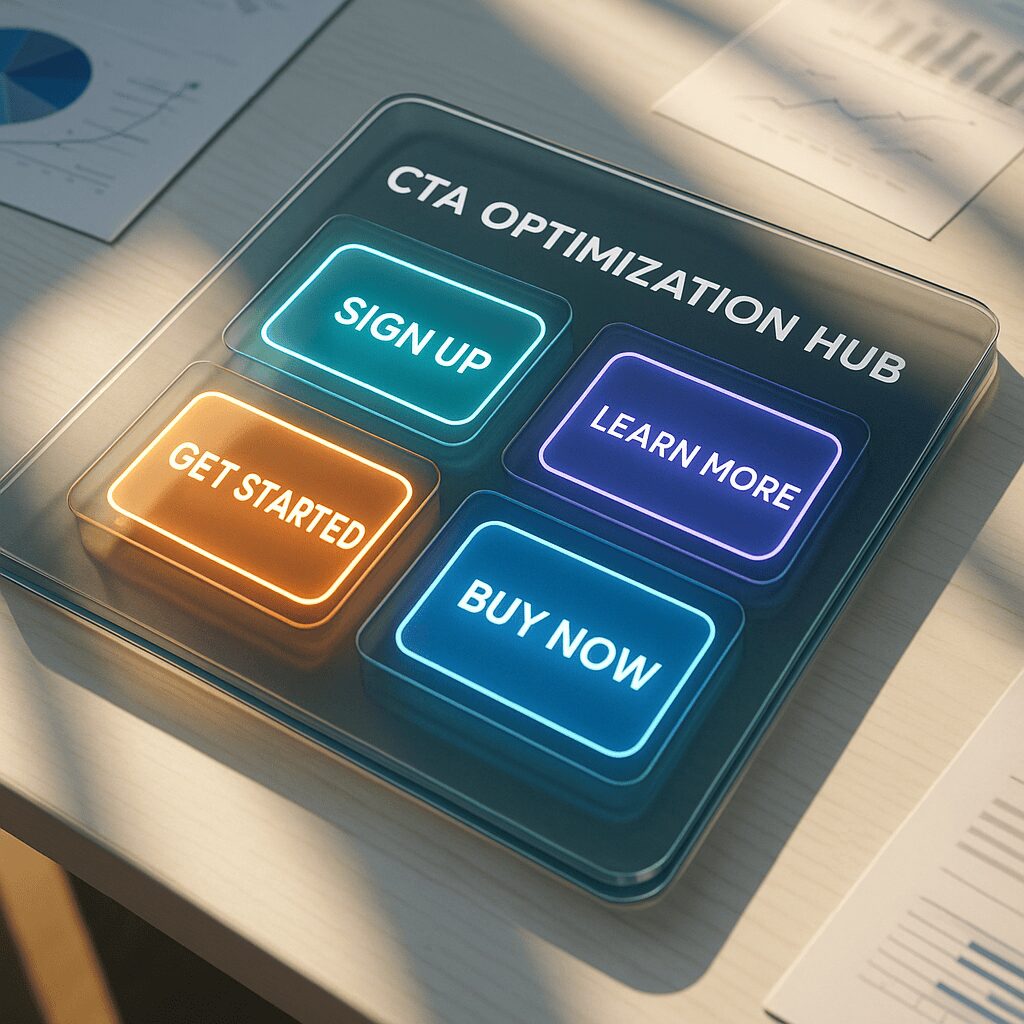
Clarity converts. Every button should read like a decision the user has already chosen to make: “Start Free Trial,” “See Pricing,” “Download Guide.” Replace generic fillers like “Submit” or “Learn More” with verbs that map directly to the next step. If a user can’t predict what happens after the click, they won’t risk it.
Context is the co-pilot. Align your button verb with the surrounding promise: if the headline says “Cut onboarding time by 50%,” your button should say “Get Faster Onboarding,” not “Explore.” The copy around the button (microcopy) should clarify commitment level—“No credit card,” “Takes 30 seconds,” “Cancel anytime”—so the action feels safe and specific.
Write for intent, not for poetry. Users scan, not study. Front-load the verb, keep it short, and eliminate ambiguity. If your funnel has multiple steps, label the step: “Create Account,” then “Choose Plan,” then “Confirm Purchase.” Decisions compound when each click is obvious, expected, and low-friction.
Lead With Value: Promise Payoff In One Click
People don’t click buttons—they click outcomes. Lead with the value you deliver, not the task you’re asking them to do. “Get My Free Template,” “Unlock 20% Off,” “See Your Savings” outperform vague commands because they promise a payoff in exchange for the click.
Personalize the ownership. Swap “Get the report” for “Get My Report.” That single word signals immediacy and relevance, turning a general asset into a personal benefit. Pair this with specificity: a number, a timeframe, or a concrete deliverable. “Generate 3 Logo Concepts” beats “Try the Tool.”
Match the button to the moment. At the top of the funnel, emphasize exploration value: “See How It Works.” Mid-funnel, spotlight proof or pricing: “Compare Plans,” “Read Customer Results.” Bottom-funnel, make the benefit unmistakable: “Start Saving Today.” Every click should feel like a reward, not a chore.
Use Urgency, Not Hype: Deadlines That Convert
Urgency works when it’s real and reasonable. Time-bound buttons like “Enroll by Friday” or scarcity-backed CTAs like “Reserve Your Seat (3 Left)” can tip a hesitant user into action—provided the constraint is honest and verifiable. Fake timers or endlessly “expiring” offers erode trust and depress long-term conversion.
Choose language that nudges, not nags. Words like “today,” “now,” and “ends Friday” create momentum without melodrama. Pair urgency with safety to remove risk: “Claim Discount—Cancel Anytime,” “Lock Price—Pay Later,” “Hold Seat—No Card Required.” The message is: act now, without fear.
Make urgency contextual, not universal. Urgency belongs where demand surges or capacity is limited (events, seasonal promos, inventory). Don’t staple countdowns on every page. Instead, align deadlines with genuine constraints and reflect them in the button copy so users feel informed, not manipulated.
Test Ruthlessly: A/B Copy That Outperforms
Test hypotheses, not hunches. Decide what you’re changing and why: verb strength (“Get” vs “Start”), value framing (“Free” vs “Save $”), pronoun (“Your” vs “My”), risk reducer (“No Credit Card”), or length (2–5 words). Isolate one variable per test to learn precisely what drives lifts.
Measure beyond clicks. A button that spikes CTR but tanks downstream metrics is a mirage. Track the full funnel: sign-ups, qualified leads, purchases, refunds, activation, retention. Segment by device, traffic source, and intent. What wins on paid mobile traffic may lose on organic desktop.
Respect the math and document the wins. Run tests to significance, avoid early peeking, and keep a control. Prioritize pages with the most traffic and highest business impact. Build a learning library with screenshots, metrics, and conclusions so your best-performing phrases—like “Get My Free Trial” or “See Pricing”—become standards, not one-off accidents.
Great button copy doesn’t shout; it shows the next best step and makes that step feel valuable, urgent, and safe. Command with clarity, lead with tangible payoff, apply honest urgency, and prove it in tests. Do this consistently, and your buttons stop being decorations—they become decisions that drive your growth.