— Paid Social Ads
Nobody’s Actually Running Your Ads.
But You’re Still Paying For It Every Month.
Retainer paid. Budget spent. Same questions every month. That’s not an agency relationship, it’s a subscription. We take over paid social accounts that have stopped producing and rebuild them until the reporting has something worth saying.
Get Your Free Paid Social Audit.


Paid Social Shouldn’t Feel Like a Mystery Bill
Meta, TikTok, LinkedIn, Instagram. Four platforms, billions of daily users, and the fastest path to new customers your business has. The catch?
Without a clear strategy, you’re burning cash and calling it marketing.
That’s where we come in. We find where the account is leaking, fix the structure, and turn spend into a system that actually produces.
How We Can Help
We plan it, launch it, and improve it week after week. Here’s what that looks like in practice.
Customer Journey Mapping
We map the path from scroll to sale so every ad, audience, and landing page is pulling in the same direction.
No orphan campaigns. No traffic getting dumped on pages that can’t convert it.
Ad Creative & Copy
Scroll-stopping ads aren’t luck. They’re built.
Our team writes, designs, and tests creative against real purchase data, not vibes.
Tracking & Data Setup
Guesswork isn’t a strategy. Data is.
We wire up clean tracking (pixels, conversions, events, server-side signals) so every click and dollar has a trail you can trust.
Testing & Optimization
Campaigns aren’t crockpots. You don’t set them and forget them. They need hands-on testing, constant trimming, and sharp adjustments.
We treat every campaign like a live P&L, because that’s what it is.
Audience Building & Retargeting
We segment by buyer intent, lifecycle stage, and past behavior, then retarget with ads that feel like they were written for the exact person seeing them.
Insights & Reporting
We don’t just hand you a spreadsheet. We tell you what’s working, why it matters, and where we’re pushing next.
Plain language and no vanity metrics dressed up as wins.

BHHSNW

SS

BPF

HC

PHX

QF

HB

jc
Their Words,
Not Ours
Here’s what our clients have said about working with us.

“When we brought Nick into our enterprise account, we were facing major challenges. Facebook’s platform changes had thrown everything off, and we needed someone who could step in fast, bring structure, and get us back on track. Nick brought a calm, steady hand and a smart strategy when we needed it most. He helped stabilize our campaigns, adapt to the changes, and keep performance strong when a lot could have gone wrong. His ability to cut through the chaos made a real difference for us.”

“Nick came in and got right to it. He cleaned up our Facebook ads, gave us reporting that actually made sense. He really helped us figure out what was working and what was wasting our money. Before Nick, we were basically flying blind. He turned the lights on and got us moving fast in the right direction. Couldn’t recommend him more. Nick is a true professional and a stand-up gentleman. Knows his stuff, stays on point, and gets it done.”
Featured on Shark Tank
“If you’re looking to grow your business, hiring Tailored Edge is the smartest move you can make. Nick and his team know the Facebook ad platform inside and out and build ads that keep targeted traffic moving through the funnel all the way to conversion. The results have far exceeded our expectations.”


“I can’t imagine my business without Tailored Edge Marketing, and I still wonder what I was doing all those years before they became part of my team! They took us to the next level after being stuck at a standstill for several years. With all their hard work, input, and feedback, I finally feel like my business is reliable and stable again. We now have targeted leads coming into our business every day, getting to know what we offer, and converting into paying clients. Thank you, Nick!”

“Hiring Nick and Tailored Edge to help us with our Facebook ads has been amazing! Not only have they saved us a lot of time and helped us grow our company, but they are also easy to work with, timely, proactive, and proficient in what they do. We can’t give them a higher recommendation.”

“Tailored Edge helped our startup build real momentum through growth hacking and Facebook ads. Nick and his team were proactive, strategic, and made a big impact when we needed it most.”

“Nick made a huge difference for our Facebook Ads — we saw real results fast after he stepped in. Easy to work with, highly effective, and truly knows how to drive success. Highly recommended!”

“Nick and the team at Tailored Edge helped us with everything — redesigning our website, getting our Facebook and LinkedIn ads up and running, managing all the content, keeping the promotions moving. I really appreciated how hard they worked and how easy they made it for us to understand what needed to happen. We got where we needed to go because of their help.”

“Nick has been awesome to work with! He made it so much easier to keep my email marketing on point. He’s helped me dial in my Facebook and TikTok ads, my lead forms, and even my landing pages. As an entrepreneur, there’s always a million things to juggle, so having Nick and Tailored Edge in my corner has been a huge relief. I know my marketing looks beautiful, stays consistent, and actually brings in sales.”
Heard This One Before?
We’ve all heard the lines. That’s why we cut the jargon, show you the numbers that matter, and make Paid Social work the way it should.
“You just need to spend more to get more results.”
—
“It takes at least 3–6 months before you’ll see anything.”
—
“Look at all the clicks you’re getting. That's how you know it’s working.”
Real Clients,
Real Results.
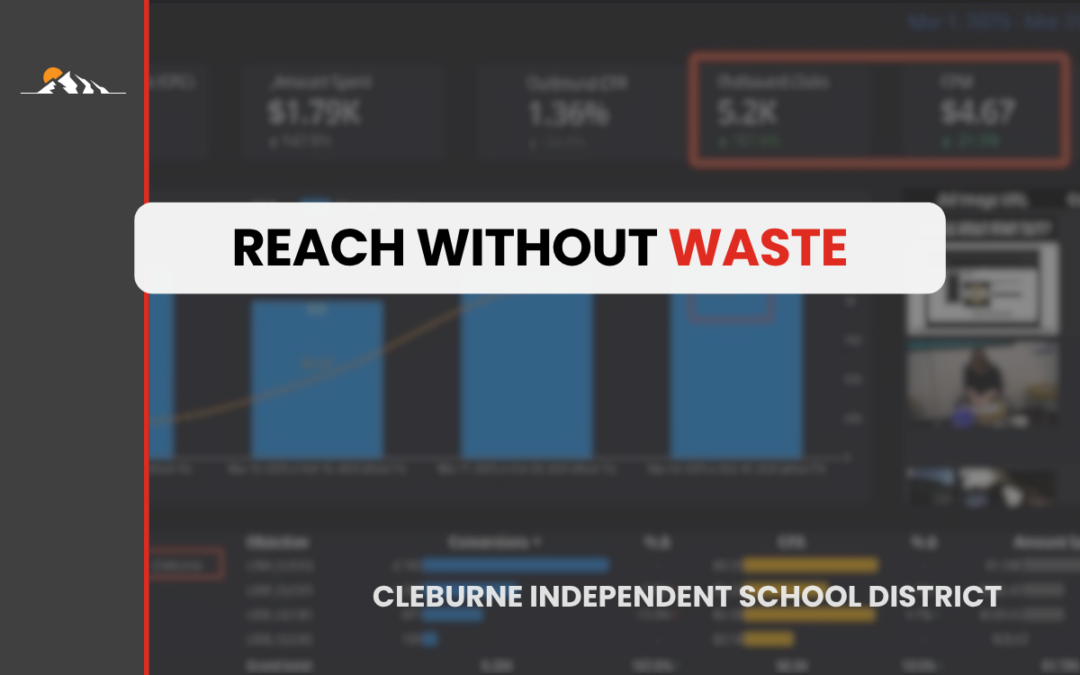
What happened. Why it worked.

Our Process
Strategy Call
We start with a focused conversation about your goals, audience, margins, and where paid social fits in. No pitches. Just a real discussion about what actually moves the needle for your business.
Audit & Plan
We dig into your past campaigns, your competition, and your target audience. Then we build a plan sized to your budget and your business. You see the logic before we build anything.
Build & Setup
We write the copy, design the creative, set up tracking, build the audiences, and launch the campaigns. We handle the technical setup so nothing slips through the cracks between plan and launch.
Launch & Test
Campaigns go live, and every dollar spent starts generating data. We watch performance in real time, cut what isn't working, and double down on what is. No three-month "learning phase" to hide behind.
Optimize & Expand
The engine's running. Now we fine-tune for growth. We test new angles, retire weak creative, and reinvest savings into what's scaling. Your efficiency should compound over time. If it isn't, we'll tell you before you ask.
Ask These Questions
-No Matter Who You Hire
These are the questions we’d ask if we were hiring a paid social agency. A strong engagement starts with straight answers.
How much budget do we need to get meaningful results?
Enough to learn fast without lighting money on fire.
Plan for a test budget that can drive 50 to 100 real conversion events per month (purchases or qualified leads).
For many businesses, that’s a few thousand dollars to start. We size spend to your price point, margins, and goals.
How long until we see results?
Some wins are immediate: cutting wasted spend, fixing broken tracking, killing losing creative. Those show up in week one. Structural gains (better CPA, higher ROAS, scaling without efficiency dropping) usually land in the 60 to 90 day window. You’ll see what’s happening the whole way, not just at the end.
Which platforms should we use? Meta, TikTok, LinkedIn, something else?
Depends entirely on where your buyers are and what they’re buying.
B2B services usually lean LinkedIn and Meta. DTC and ecommerce usually lean Meta and TikTok.
We don’t pick platforms based on what’s trending. We pick based on where your customers spend time and where the ad unit fits your offer.
Do we need tons of new creative to make this work?
You need the right creative, tested fast. That usually means 3 to 5 fresh concepts per month, not 30. We’d rather test five things deliberately than throw 30 at the wall and call it a strategy.
Our site and landing pages aren't perfect. Will that kill performance?
It’ll cap performance. A clean campaign pointed at a weak page still underperforms a solid campaign pointed at a good page. We’ll flag page-level issues during the audit and either recommend fixes on your end or handle them ourselves. Either way, we’re not going to pretend the page doesn’t matter.
Can you track this accurately with all the privacy changes?
Yes, but it takes real work. We set up Conversions API, server-side tracking, and proper UTM structure to recover the signal that iOS and privacy updates took away. A lot of accounts we see are still relying on pixel-only tracking and significantly under-reporting. Fixing that is often the single biggest early win.
What metrics actually matter?
CPA, ROAS, conversion rate, and cost per qualified lead. Those are the ones tied to revenue or pipeline. Impressions, CTR, and engagement are diagnostic signals, useful for troubleshooting but not the scoreboard.
What if the ads don’t work out of the gate?
We tell you. Directly. We don’t spin bad results or wait three months hoping the numbers turn around. If something’s underperforming, you’ll know what it is, why it’s happening, and what we’re changing. And if we ever get to a point where we don’t think we can move the needle for you, we’ll say that too.


We’re Not Here to Sell You Ads.
We’re here to build campaigns that actually drive your business forward.


